

Then Can I run with tight calves? WARM UP AND COOL DOWN. In any weather conditions, a slow and steady warmup is key to avoiding instant tightness in your muscles as you start to up the pace. Take a few minutes before each run to walk, do activation stretches like lunges (focus on the back leg for a greater calf stretch) and gentle hops on your toes.
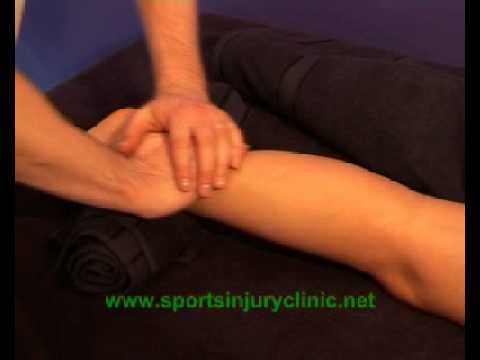
Furthermore, Is it good to massage your calves?
A calf massage can help the body relax. A calf massage helps relax the body both mentally and physically. A calf massage helps the body to relax by decreasing muscle tightness and psychologically relaxing the person. Muscles in the calf can become tight for many reasons such as injury or overuse.
Is it good to massage sore calf muscles? Massaging your legs is a good way to revive sore, tired legs after exercising or other activities. A separate foot massage can help even more. Other things you can do to relieve sore muscles that compliment massage include: stretching exercises.
Table of Contents
Why are my lower calves so tight?
Tight calves can be caused by:
Overuse – sudden start/increase in activity or change in activity. Underuse – not moving enough. Muscle wasting (atrophy) – see underuse but also common in older age. Muscle tears – these would also be acutely painful as well as tight.
What problems can tight calves cause?
Tight calf muscles can cause issues up and down ‘the chain’, downward tension would increase tension through your achilles tendon and onwards to the plantar fascia (in your feet). Upwards tension might give rise to issues in your hamstring’s or even your lower back.
How long does a tight calf last?
They can last for as little as a few seconds or up to 15 minutes or more. For frequent cramping, it might help to stretch and exercise the calves more regularly. If overuse is causing the tight calves, take a break from any activity that may cause the calf muscles to strain.
Is it OK to run with calf pain?
For runners, sore muscles come with the territory. If you can’t handle tender calves and aching hamstrings, you shouldn’t run. In fact, according to surveys, muscle soreness is one of the major reasons non-runners don’t run.
How do you release a trigger point in your calf?

Does cupping help tight calves?
“People who complain of shin splints or plantar fasciitis, a lot of times that involves tightness in the muscles in the lower leg, in the calf and the shin area, so you can use sometimes those cupping techniques to loosen those muscles up to get more mobility in those muscles.”
How do you relax your legs while sleeping?
Lifestyle and home remedies
- Try baths and massages. Soaking in a warm bath and massaging your legs can relax your muscles.
- Apply warm or cool packs. Use of heat or cold, or alternating use of the two, may lessen your limb sensations.
- Establish good sleep hygiene. …
- Exercise. …
- Avoid caffeine. …
- Consider using a foot wrap.
How can you tell the difference between a pulled calf muscle and a blood clot?
Symptoms of DVT tend to become worse over time, while symptoms associated with muscle strain usually resolve as time goes by. For calf pain, DVT usually causes pain in the back of the calf, while an injured muscle typically causes discomfort in the side of the calf.
Why are my calves so big and hard?
What Causes Big Calves? Bigger-than-average calf muscles could be the result of genetics, indulging in too many salty foods, carrying excess body fat or doing the wrong kinds of exercises for your body type.
When I wake up my calves are tight?
Tightening, or contracture, of the gastrocnemius muscle can lead to what is called “start-up pain.” When pain occurs with the first few steps after arising in the morning or getting up from a chair and resolves after a minute or two of walking, this is referred to as “start-up pain.”
How long do you rest a calf strain?
In the less severe cases it usually takes up to three days for a pulled calf muscle to start feeling better. In the most severe cases that don’t require surgery a full recovery may take up to six weeks. In the case that the injury requires surgery the recovery period may extend up to six months to a full year.
Is heat good for tight calf muscles?
Why Use Heat
Heat helps reduce muscle pain, stiffness and spasms. It increases the blood flow to soothe the nervous system and relax your joints and muscles. Heat can be used before exercising to loosen up tight muscles.
Is walking good for calf strain?
Gently move your ankle regularly to avoid stiffness. Avoid forceful and strenuous activity such as running and jumping until you can walk without it causing any pain. Always try to walk normally, i.e. your heel strikes the floor first, rock forward on your foot and then push off with your toes.
Should you massage a strained calf muscle?
The No HARM Protocol should also be applied – no heat, no alcohol, no running or activity, and no massage. This will ensure decreased bleeding and swelling in the injured area.
How long should you rest a calf strain?
In total, it usually takes up to three days for a pulled calf muscle to start feeling better. But a full recovery may take up to six weeks, according to Oxford University Hospitals. Severe swelling can make any pain and discomfort last a bit longer. Walking on recovering calf muscles can also increase recovery time.
How do you fix tight calves and Achilles?
To do this exercise, you’ll need a wall or other support, such as a chair.
- Place your hands on the wall or chair. …
- Step the leg you want to stretch behind you. …
- Bend your other knee toward the wall, keeping your back leg straight.
- Lean toward the wall until you feel a gentle stretch in your calf. …
- Hold for 30 seconds.
Do trigger points ever go away?
Trigger points do not go away on their own. If rested or treated they may regress slightly to a state where they stop referring pain unless a therapist presses on them, but they will still be there.
Can you run with trigger points?
Trigger points can be extremely frustrating for runners. Often not diagnosed correctly, they can take you out of the running indefinitely. If you are prone to get one, you will likely get more than one.
Where do you put cupping on calves?

What is the point of calf cupping?
Cupping is used to treat pain, ease scar tissue deep within muscles and connective tissues, and reduce swelling and muscle knots. Also, like many complementary treatments, cupping is supposed to minimize circulating toxins by drawing them into the skin where they are more easily removed.
How often can you cup your legs?
You’ll feel the pull on your skin. Release your squeeze and slide the cup back and forth or in a circular motion. Continue this motion for 10 to 15 minutes per area. Repeat two to three times per week as long as you continue treatment.